
Kyrgyz food was made for life on the move. Nomads rode between valleys and high pastures in heat and frost, so their meals had to be filling: meat, milk, flour and a little fruit and vegetables. Ingredients keep their natural taste — you will not find many sauces or spices.
More than 80 ethnic groups live in Kyrgyzstan, and you taste that on the table too: Uzbek plov in the south, Dungan and Uyghur noodles, Russian soups and pastries, Korean salads in Bishkek’s bazaars. Here are the dishes worth trying, and the customs that come with them.
Beshbarmak — more than a dish
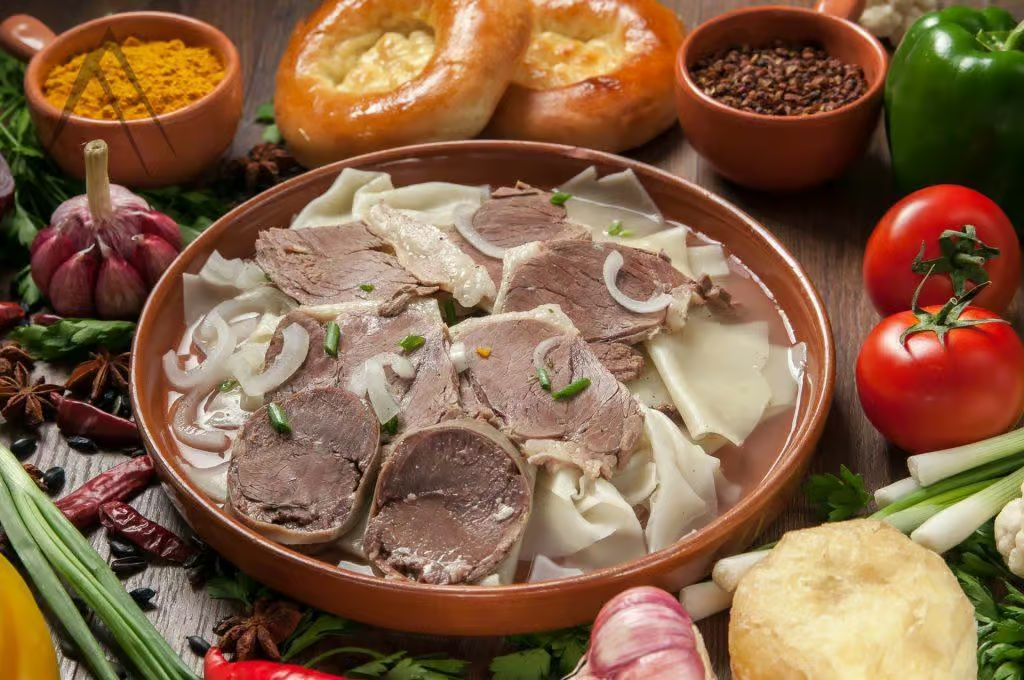
Beshbarmak is the festive dish of the Kyrgyz and comes with its own ceremony. A sheep is slaughtered and boiled in a big iron cauldron (kazan) until the broth is rich and the meat falls off the bone. The name means ‘five fingers’ — traditionally it is eaten by hand.
The meal is served in stages. First comes jash shorpo, a strong broth with onions. Then kuiruk-boor — thin slices of boiled liver and tail fat. Then kabyrga, the ribs. Finally the beshbarmak itself arrives on a large platter: finely cut meat mixed with home-made noodles and an onion sauce.
Pieces of meat are shared out by rank. The most honoured guest receives the sheep’s head and passes small pieces of it to others at the table; elders get the best bones.
Dishes to try
- Kuurdak — fried chunks of mutton, beef or horse meat (sometimes liver and heart) with lots of onion. Hearty and rich.
- Plov — rice cooked in a kazan with carrots, onions and meat. The main festive dish of southern Kyrgyzstan.
- Lagman — hand-pulled noodles under a spicy sauce of meat, peppers and vegetables. Ask for gyuro lagman for the stir-fried version.
- Ashlyam-fu — a cold, sour and spicy Dungan noodle dish with starch jelly, famous in Karakol. Perfect on a hot day.
- Manty — large steamed dumplings with minced mutton and onion, usually served five to a plate and eaten by hand.
- Chuchvara — small dumplings in broth with sour cream.
- Oromo — a steamed roll of thin dough filled with potato, onion and herbs.
- Shorpo — clear soup with big pieces of meat on the bone, potatoes and carrots.
- Samsa — triangular or round pastries with meat and onion, baked on the hot wall of a clay tandoor oven.
- Shashlyk — grilled skewers of mutton, beef, chicken or liver, served with raw onion and vinegar.
- Chuchuk — horse-meat sausage, a delicacy for celebrations.
- Fried Issyk-Kul trout — served in lakeside cafés around the lake.
Bread
Bread is sacred in Kyrgyzstan: it is never thrown away, never put upside down and never stepped over. Every meal starts by breaking bread.
- Boorsok — small pieces of fried dough, salty or sweet. No celebration table is complete without a mountain of boorsok, and they stay fresh for days.
- Lepyoshka (nan) — round flatbread baked on the wall of a tandoor. The baker slaps the dough onto the hot clay and pulls it off seconds later.
- Kattama — flaky layered flatbread, rolled with butter or onion, for guests and special days.
- Kalama — simple unleavened bread baked in a pan — the everyday bread of the yurt camps.
- Tokoch and patyr — rich tandoor breads, often topped with sesame or nigella seeds.
Milk and dairy
Dairy was the heart of the nomad diet, and the summer pastures still run on it. Look out for airan (drinking yoghurt), kaimak (thick cream — delicious with boorsok and jam), sary mai (clarified butter) and kurut — small, very salty balls of dried curd that keep for months. Kurut is the nomad’s travel snack; try it, but start with a small bite.
Drinks
- Kymyz — lightly fermented mare’s milk, the drink of the summer pastures. It is made only in the warm months, when mares graze on fresh grass: they are milked every two hours at the height of the season. The milk is churned in a saba, a smoked leather bag, with a wooden plunger — and the more it is churned, the better. The first kymyz of late May is mild; by midsummer it is stronger and slightly fizzy. Many Kyrgyz believe in its healing power.
- Maksym and jarma — cool, slightly sour drinks made from barley or other grains, sold from barrels on city streets in summer.
- Bozo — a thick fermented millet drink, mostly drunk in winter.
- Tea — every meal and every visit begins with tea, black or green, often with milk. Try kuurma chai or atkanchai — tea with milk, butter and a pinch of salt — on a cold morning in the mountains.
Food customs
- Hands are washed before the meal — often someone pours water from a jug for each guest in turn.
- Guests sit in small groups around shared plates and eat from their own side.
- A small piece of meat is always left on the plate for the children of the house or the women who served the meal.
- When passing a knife, hold out the handle first.
- At the end of a meal people say a short blessing and pass their palms over their face — the gesture is called omin. Join in quietly; it is a sign of thanks.
- At Nooruz (21 March) families cook sumolok, a sweet porridge of sprouted wheat that simmers all night.
Tips for travellers
- Try new dishes — especially kymyz and very fatty meat — in small portions first and see how your stomach reacts.
- Locals drink hot tea, not cold drinks, with fatty food like plov, beshbarmak and kuurdak. It really helps; order vegetables or a salad on the side.
- Don’t overdo the fruit on the first day — apricots, peaches, melons and grapes are delicious but strong.
- Choose busy cafés where food turns over quickly, especially in hot weather.
- Bottled water is sold everywhere. Mountain streams look clean, but livestock graze above them — use a filter or purification tablets on treks.
- Vegetarian? Say “etsiz” (without meat). It is not always easy outside Bishkek and Karakol, but our team will arrange vegetarian meals on tours if you tell us in advance.
Three recipes to try at home
Beshbarmak (serves 4)
You need: about 650 g mutton (or beef) with some bone, 2 onions, black pepper and salt. For the noodles: 250 g flour, about 80 ml water, a pinch of salt.
- Put the meat in a large pot with a little water, bring to the boil, skim, then simmer with salt and pepper for 2–2½ hours until very tender.
- Knead a firm dough from the flour, water and salt and let it rest for 20 minutes. Roll it out very thinly and cut into squares or rectangles of about 5 cm.
- Take the meat out and slice it into thin strips. Slice the onions into rings and simmer them in a ladle of fatty broth with black pepper for a few minutes.
- Boil the noodle squares in the broth for 3–4 minutes, lift them out onto a large platter, mix with the meat and top with the onion sauce.
- Serve the hot broth separately in bowls.
Shorpo — meat soup (serves 4)
You need: about 700 g mutton on the bone, 1 onion, 2 tomatoes, 4 potatoes, a little fat or oil, 1.2 litres water, salt, pepper, fresh herbs.
- Cut the meat into pieces with the bone, season with salt and pepper and brown it in hot fat in a heavy pot.
- Add the onion in rings and the chopped tomatoes, pour in the water and simmer for 5–10 minutes.
- Add the diced potatoes, cover and cook until the meat and potatoes are tender (about 1 hour on a low heat).
- Sprinkle with chopped dill or coriander and serve.
Kyrgyz tea with cream
Brew strong black tea. Pour a spoonful of cream (or milk) into each bowl, top up with hot tea and add a small pinch of salt. Serve with boorsok, butter and jam — exactly as in a yurt on the jailoo.
Want to taste all of this in place? On our tours you eat with herder families on the pastures and in village guest houses. See also: The Kyrgyz yurt and Kyrgyz customs & hospitality.