
Hospitality is the oldest Kyrgyz custom. In the past, nobody passing a nomad camp left without sharing the family’s food and a place to sleep. Kyrgyz family traditions grew out of the nomadic way of life and are still very much alive — in villages and in modern Bishkek flats alike.
Hospitality
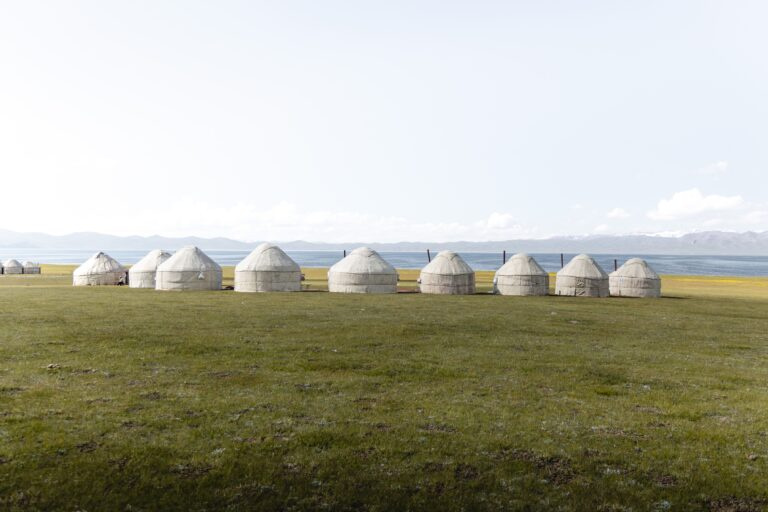
When riders approached a yurt, the hosts went out to meet them, helped them off their horses and invited them in. It was rude to ask a guest straight away why he had come. The best food and the best bedding were his, and the host was responsible for his belongings and his horse. A family that turned a traveller away was talked about in the whole village.
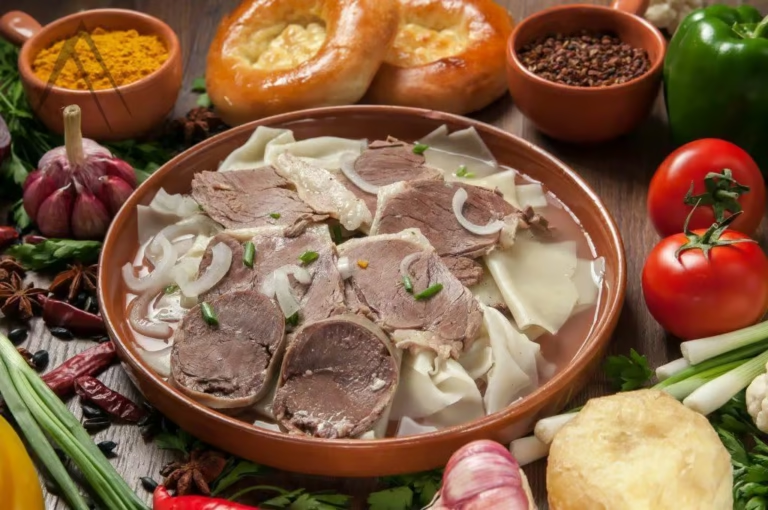
That spirit has survived. If you are invited into a Kyrgyz home, expect tea, bread, boorsok, jam and more food than you can possibly eat.
Tips for being a good guest
- Take off your shoes at the door.
- Let the host seat you — the place of honour is opposite the door, usually for the eldest or the guest.
- Accept tea with your right hand or both hands. Your bowl will be refilled only halfway — that is a sign of respect, meaning ‘stay longer’.
- Break bread with your hands; never put it upside down or on the floor.
- Try a little of everything. If you have had enough, leave some tea in your bowl.
- Bring a small gift — sweets, fruit, tea or something from your country.
- Greet elders first. Men often shake hands with both hands or put a hand on the heart.
Birth and childhood
Children are the centre of Kyrgyz family life. An old saying goes: ‘A house with children is a bazaar; a house without children is a grave.’
- Suyunchu — the person who brings the good news of a birth receives a gift.
- Beshik toi — a feast when the baby is laid in the cradle (beshik) for the first time, traditionally after forty days. The child’s first shirt was sewn from pieces of cloth given by respected elders, to pass on long life.
- The name was given by a respected elder, because a name was believed to shape a person’s fate.
- Tushoo kesuu — a celebration of the child’s first steps. The little one’s legs are tied with a black-and-white woollen cord (for the good and bad days of life). Children race towards the child, and the winner cuts the cord and receives a small prize — so the child will walk fast and far. This ceremony is still held in almost every family.
The Kyrgyz also count life in 12-year cycles of the animal calendar, called muchol. Special birthdays fall at 13, 25, 37, 49, 61 and 73 — each of them the start of a new cycle, which was traditionally marked with a feast and gifts.
Weddings
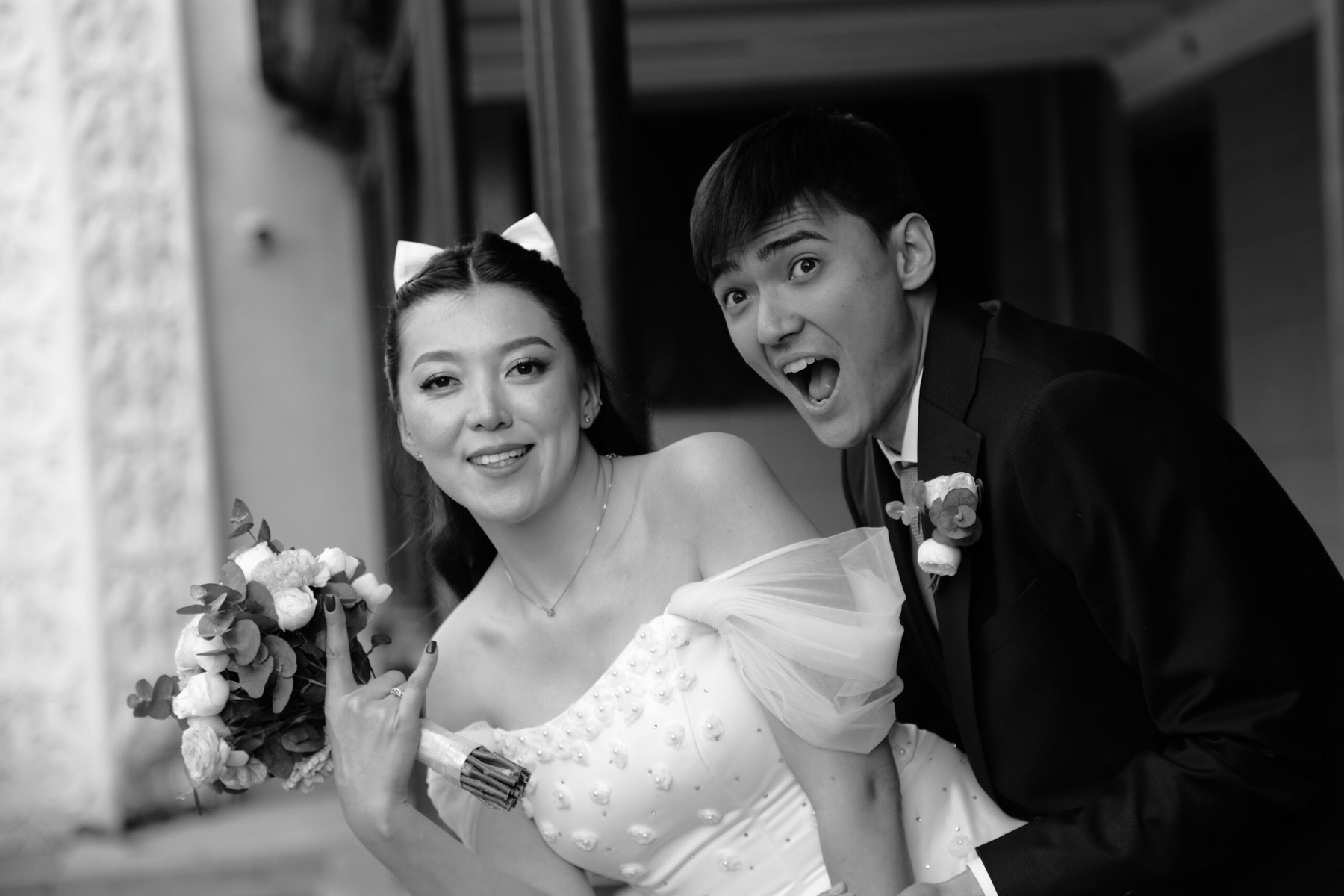
A Kyrgyz wedding, toi, is the biggest celebration in a family’s life — often with hundreds of guests.
It begins with the matchmaking. The groom’s family visits the bride’s family, and over a laden table, the dastorkon, the parents get to know each other. When everyone agrees, the groom’s mother puts earrings on the bride — the sign that she is engaged.
The groom’s family pays a bride price, kalym — today usually money, livestock and gifts of clothes (kiit) for the bride’s relatives — and the bride’s family prepares her dowry, sep: bedding, carpets, clothes and household goods. Her mother and aunts sew a koshogo, a curtain for the newlyweds’ bed.
On the day, the couple registers the marriage, often followed by a religious blessing, nike, from a mullah. When the bride enters her new home, her mother-in-law covers her head with a white scarf as a blessing. The evening feast is led by a toastmaster; the elders speak first and bless the couple, and then come music, dancing and many toasts. Guests give money in envelopes, carpets and dishes; the bride’s guests traditionally give gold jewellery.
In villages the bride may wear traditional dress: a long white gown, a velvet jacket embroidered with gold, and a tall conical headdress, the shokulo, with a veil.
What about bride kidnapping?
You may read about ala kachuu, bride kidnapping. Historians and elders agree that forced kidnapping is not an honourable old tradition. Many couples in the past ‘eloped’ by agreement, but forcing a woman into marriage is a serious crime in Kyrgyzstan today: since the new Criminal Code of 2021 it is punishable by 5–7 years in prison, and up to 10 years if the girl is under 18. Women’s groups and the government campaign actively against it.
Mourning customs
Respect for the dead is central to Kyrgyz life. When someone dies, relatives come from all over the country — absence is almost unforgivable. A yurt is put up near the house; the women mourn inside with traditional laments, and the whole family works together to receive hundreds of guests. Memorial meals follow on the 3rd, 7th and 40th day and at the first anniversary, the ash, which ends the mourning period. In the past, wealthy families held horse races and games at a great ash.
Moving to the summer pastures
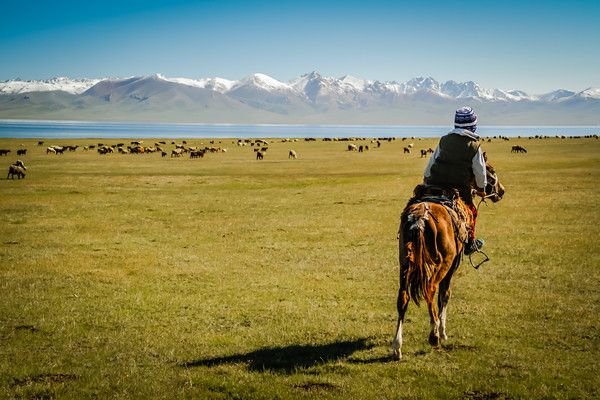
The Kyrgyz followed the grass: in spring they moved their herds from the winter camps up into the valleys, reaching the alpine pastures, the jailoo, by midsummer. On moving day everyone wore their best clothes. Neighbours along the way came out with bowls of kymyz, and at the new camp they arrived with food and blessings. Herding families still make this journey every year — this is the life you see on our horse treks.
Nooruz and other celebrations
- Nooruz (21 March) — the spring new year, older than Islam. Families cook sumolok from sprouted wheat, clean their homes, smoke them with juniper and visit friends; there are horse games and concerts.
- Orozo Ait — the end of Ramadan, the month of fasting. Families bake boorsok, visit relatives and remember the dead.
- Kurman Ait — the feast of sacrifice. A sheep is slaughtered and the meat shared with family, neighbours and the poor. The two Aits follow the Islamic calendar, so their dates move every year.
- Kalpak Day (5 March) — the day of the traditional white felt hat.
Read more about religion and sacred places, the yurt and Kyrgyz food.